
AI and VFX in commercials: what changes on set in a hybrid production
The choice between shooting, generating and compositing isn't made in post: it's made before the shoot. What I asked the production to capture for the post of the Vecchio Amaro del Capo commercial, and why it worked.
"Can we do it with AI?" is the question that opens almost every quote request these days. The one that matters comes earlier, and it is a different one: what do we need to shoot, knowing that part of the commercial will be generated?
In a hybrid production, the answer to that question decides the post. If the shoot was planned for what comes after, post integrates. If it wasn't, post plays catch-up. In this article I look at what changes on set through a real case: "Capo That Moment", the summer 2026 commercial for Vecchio Amaro del Capo, which I worked on as a VFX artist.
What a hybrid video production is
A hybrid video production combines live-action footage, generative AI and traditional VFX in the same project, choosing the method shot by shot. It is not a commercial "made with AI": it is a commercial that was shot, where some elements are generated and then composited in, while anything that needs absolute control stays with traditional methods.
How I decide, shot by shot, which method to use is covered in How I choose between AI and traditional VFX for every shot. Here I am interested in the step before that: what happens before post begins.
In a hybrid production, post starts before the shoot
On Amaro del Capo, director Marco De Aguilar brought me in during pre-production. I wasn't on set. His question was precise: how to shoot, knowing post would be tight, and whether it could be finished by combining traditional methods and AI.
With four shoot days for the whole commercial and eight days planned for the post on my eighteen shots, anything missing from the shoot would have become a problem in post. The answer to the director's question became a shot list.
What you shoot differently when post will use AI
Four requests, all coming from the same question: what will I, or the model, need so that nothing has to be invented?
The real product, always
Original bottles and glasses, shot on set. A generative model can deliver believable liquid or regenerate an aerial shot, but it rewrites the text on labels. In a product commercial a single wrong letter makes the shot unusable. The real product does two jobs: it is the reference for generation, and the base for tracking when a generated label has to be replaced with the real one.
Shoot without what will be generated
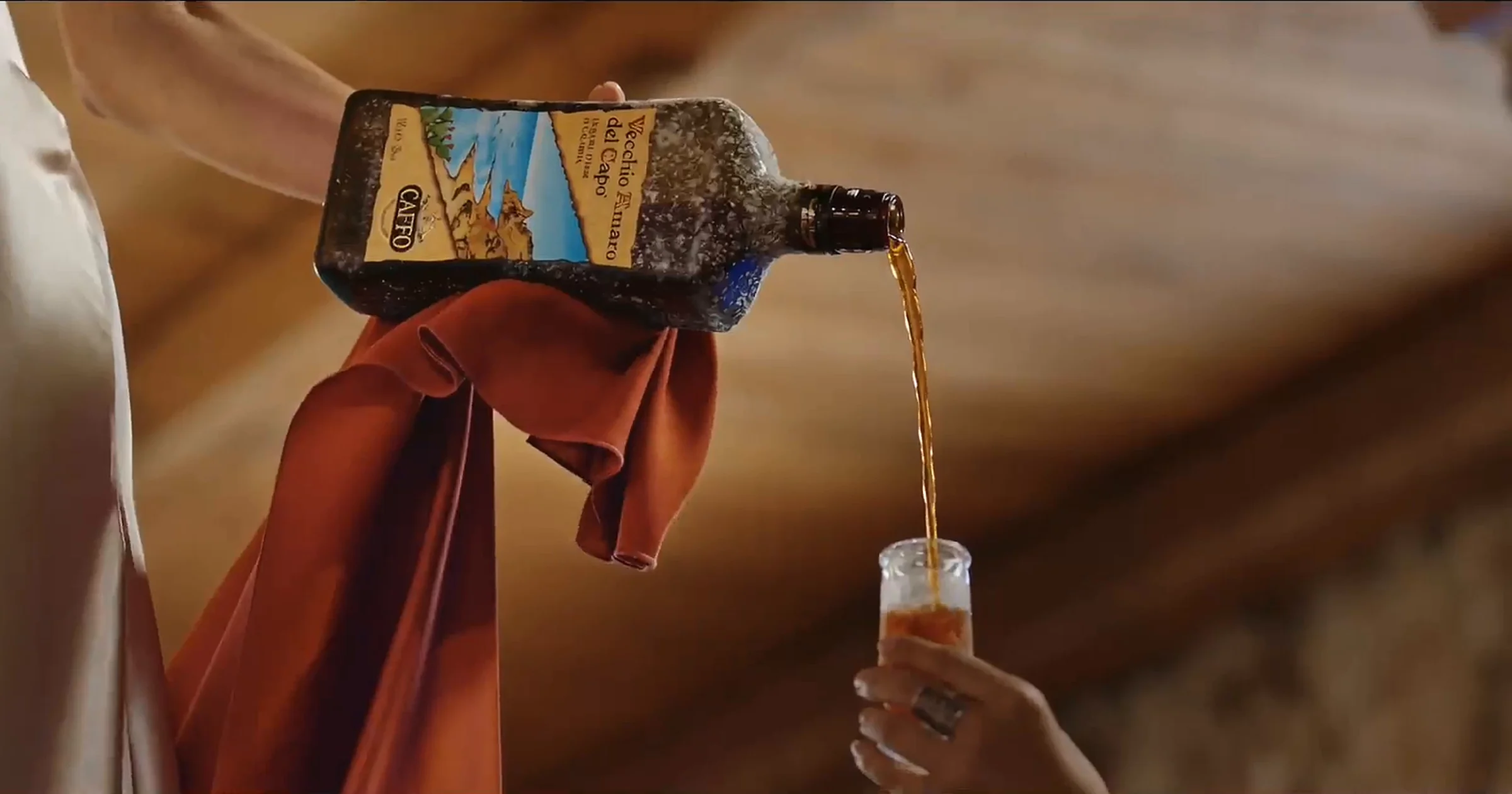
The pours were shot without liquid. It was a set decision first: no wardrobe or set tables to fix between takes. In exchange, we photographed the liquid in many different pours to use as reference. In post, every pour in the commercial was generated and composited into the live-action shot.
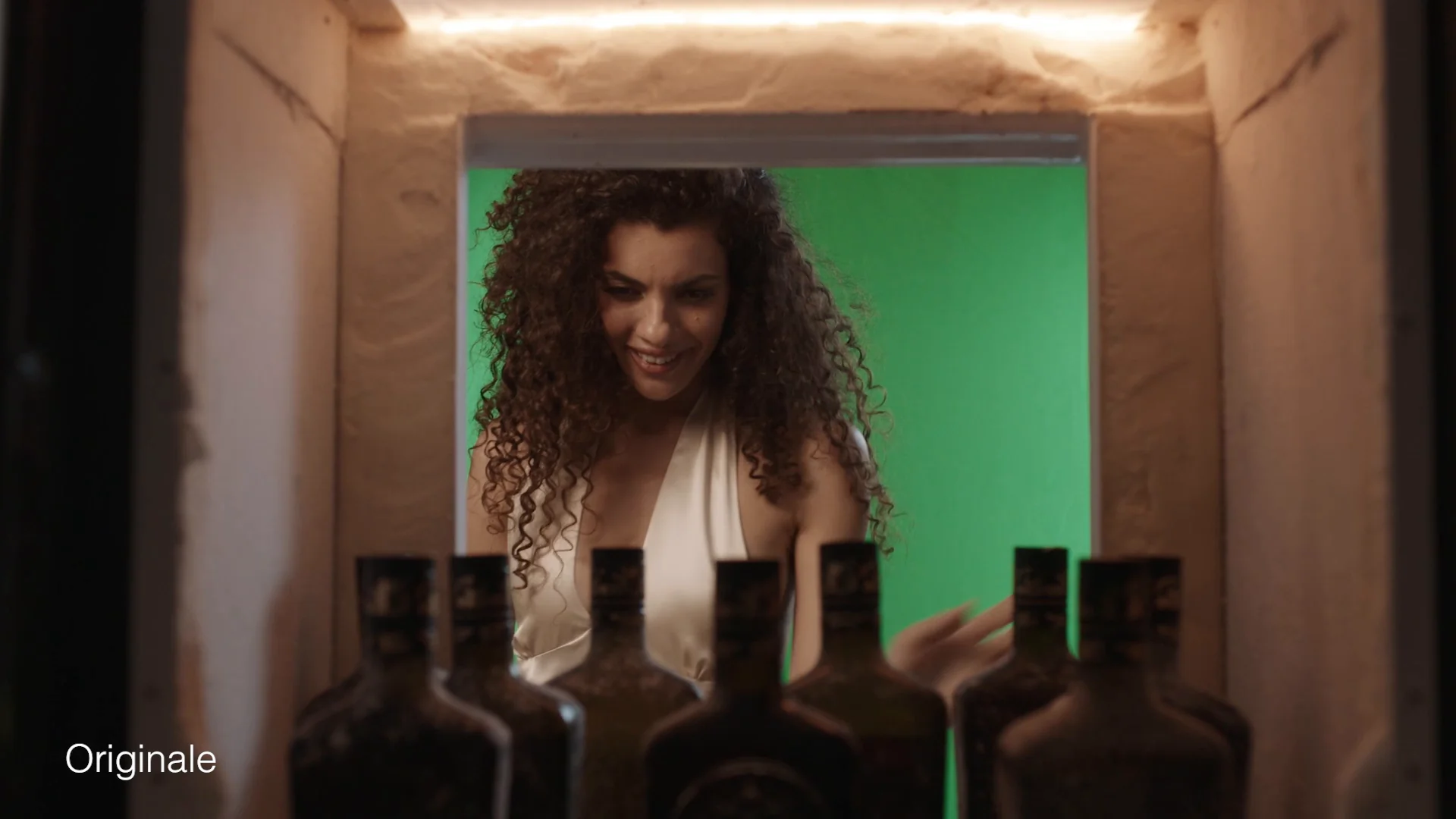
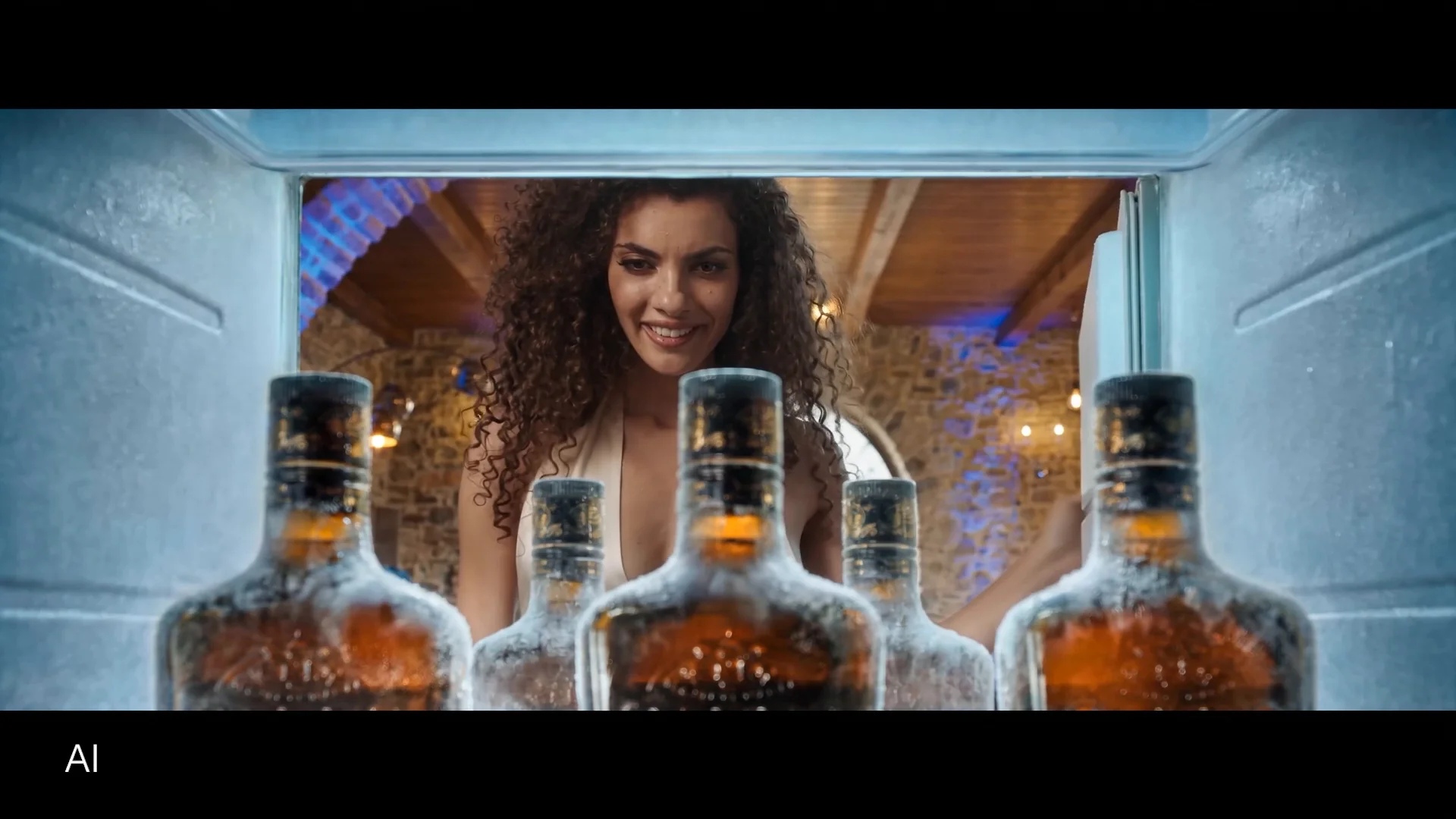
The locations, empty too
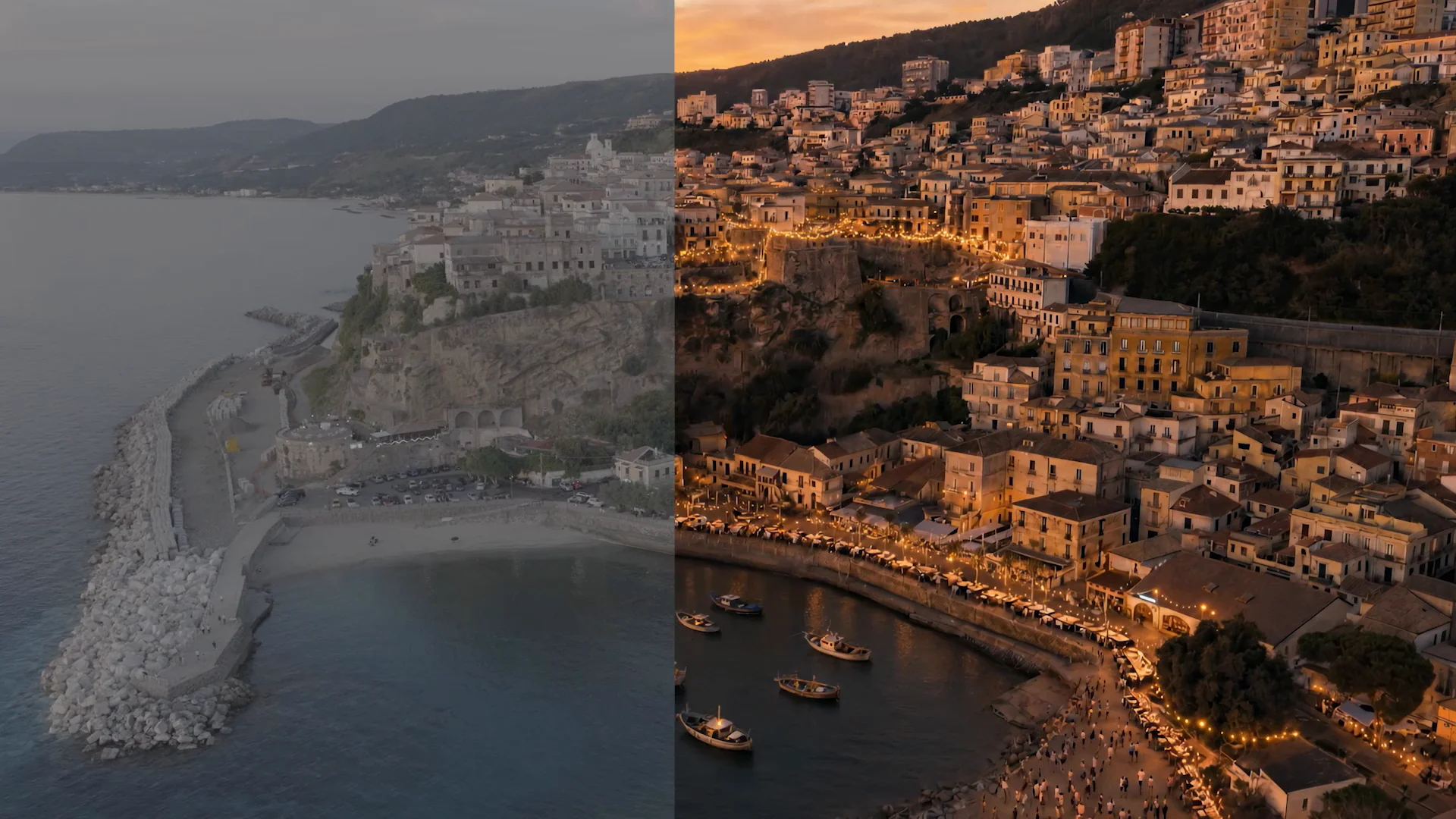
Environment plates, meaning the locations shot without action, are the material that extensions, regenerations and frame zeros start from (a frame zero is the image a generation starts from). For the drone shots, the original footage became the guide to regenerate the scene with different light and the atmosphere of the festival. I built the final packshot, the marina seen from below with people celebrating, starting from reference images of the empty marina. Then I replaced the glasses with traditional methods and, once the video was generated, corrected the labels.
The cast as reference
For the main characters we did a dedicated shoot: 360° views, facial details, expressions. That material served as reference for some shots generated from the cast's actors and then composited into the commercial. It also solved a problem that is easy to underestimate with AI: the people in those shots are actors who signed a release. That keeps the generated shots anchored to the actors actually chosen for the campaign, without bringing in faces from outside the cast.
What you don't hand to generation
Product, labels, signage. Where generation altered the text, I replaced the labels with the original ones through tracking. Some signs I added in After Effects and Mocha. When the commercial was adapted for the Red Hot Edition, I did the whole product change with tracking and label replacement, shot by shot.
The rule is simple to state: AI works where it gives a real advantage, traditional methods hold everything that needs absolute control.
Hybrid post produces more material than the shoot
Eighteen shots, twelve days, around 650 image and video assets. The eight planned days became twelve: we managed to get four extra days on the delivery.
On day ten, changes came in on shots made on day two and already approved. In a production that is normal. The problem is finding how that shot was made, across four platforms (Magnific, ComfyUI, Higgsfield, Runway) and hundreds of versions.
That is why I use Rewake, a tool I built to keep the reference image, prompt, platform and model linked, shot by shot. On day ten I knew where to pick up from: a change, not a search. How I organise a project like this is explained in How to organise an AI film project without losing prompts, takes and decisions.
After five days, the production team had started calling me "Master Jedi Perilli". They thought I had superpowers. All I had was a tidy archive: the superpowers, if any, belonged to Rewake.
What to ask for before shooting a commercial with AI and VFX
If you are preparing a commercial with hybrid post, this is the list I would use again. I didn't change it once the job was done: it worked as it was.
- Bring in whoever will do the post while the shot list is being written, not after the edit.
- Decide shot by shot what will be shot, generated and composited, and write it into the list.
- Shoot the real product: original bottles, labels and glasses.
- Shoot the locations empty: plates feed extensions, regenerations and frame zeros.
- Photograph references for whatever will be generated. For us, the liquid in many pours.
- Do a reference shoot of the cast (360° views, face, expressions) and check with the production that the releases also cover this use.
- Consider what is better left unshot: dry pours made the shoot simpler.
- Plan post on real numbers, with room for late changes and a system to find how every shot was made.
Does AI save money?
On some items, yes. A generated pour saves fixing wardrobe and tables between takes. A regenerated aerial shot changes light and atmosphere without another flight. But the work doesn't disappear: it moves from the shoot to post, into preparing references, discarded generations, compositing and corrections. That is why a serious quote is built on shots, not on platform credits.
Method before tools
Tools change every few months. What made this commercial possible wasn't a model: it was a shot list designed for post and agreed with the director before the shoot. The full case study, with the breakdown of what was shot, generated and composited, is here: Vecchio Amaro del Capo — Capo That Moment.
If you are preparing a commercial and want to work out what to shoot for post, let's talk before the location scout. Here is how I work on VFX for commercials and AI video production.
Frequently asked questions
What is a hybrid video production?
A production that combines live-action footage, generative AI and traditional VFX, choosing the method shot by shot. The commercial is shot. Some elements are generated and composited in, while the product, labels and anything that needs absolute control stay with traditional methods.
When should the VFX artist be brought into a commercial that uses AI?
In pre-production, while the shot list is being written. That is where you decide what to shoot, what to generate and which references you need. On Vecchio Amaro del Capo the director brought me in before the shoot.
Can AI generate the product in a commercial?
It can, but it rewrites the text on labels and cannot guarantee the product stays identical. That is why bottles, labels and glasses are shot for real and, where needed, the original label is tracked back in.
How do you use real actors in AI-generated shots?
With a dedicated reference shoot (360° views, facial details, expressions) and the cast's releases. That keeps the generated shots anchored to the actors chosen for the campaign. Whether the releases cover this use is something to check with the production.


Have a project in mind?
If this article gave you useful ideas and you want to understand how to apply them to your project, tell me what you need.